How Indian Housewives Are Earning ₹30,000 a Month Selling Online From Home
📅 Updated: January 2026 | ✍️ Snazzyway Editorial Team | ⏱️ 9 min read
How are Indian housewives earning money by selling online from home?
Indian housewives are earning ₹30,000 and more per month by selling women's fashion and lingerie online through platforms like Shopify, Instagram, and WhatsApp — without holding any inventory, without leaving home, and without any prior business experience. The model they are using is called dropshipping, where the supplier handles all manufacturing, packing, and shipping directly to the customer while the seller focuses only on marketing and customer relationships.
🔍 Snazzyway Insight — What We Have Seen Across 4,000 Plus Sellers
Before we get into the full guide, here is something we want to share directly from our experience.
At Snazzyway, we have been manufacturing and supplying women's fashion and lingerie since 2014. Over 12+ years we have worked with more than 4,000 active sellers across India, Europe, and the USA. And one of the most consistent and surprising patterns we have seen in our seller data is this — some of our most successful sellers are not young entrepreneurs from metro cities. They are housewives from Jaipur, Lucknow, Nagpur, Bhopal, and smaller towns across India who started with zero business experience, zero investment, and zero employees.
They started by listing 10 to 15 products on Instagram or WhatsApp. They took orders manually. They reinvested their first earnings. And within 12 to 18 months, many of them were processing hundreds of orders per month and earning more than most salaried professionals in their city.
This is not an exception in our network. It is a pattern. And this post is about exactly how they did it — and how you can do the same thing in 2026.
📋 Quick Summary
- Indian housewives are building ₹30,000 to ₹1 lakh per month businesses selling fashion online from home in 2026
- The dropshipping model requires zero inventory, zero upfront stock investment, and no warehouse
- Women's fashion and lingerie is the most accessible and highest repeat-purchase category to start with
- Starting channels are Instagram, WhatsApp, and Shopify — all free or very low cost to begin
- Snazzyway has worked with thousands of housewife sellers since 2014 and has seen consistent income growth
- This post covers the exact steps, real seller stories, earnings breakdown, pros and cons, and a full FAQ
Why This Opportunity Exists Right Now in 2026
Ten years ago, starting a business from home in India meant either stitching clothes, making tiffin boxes, or teaching tuition. The options were limited, the income was capped, and scaling beyond your immediate neighbourhood was nearly impossible.
2026 is completely different.
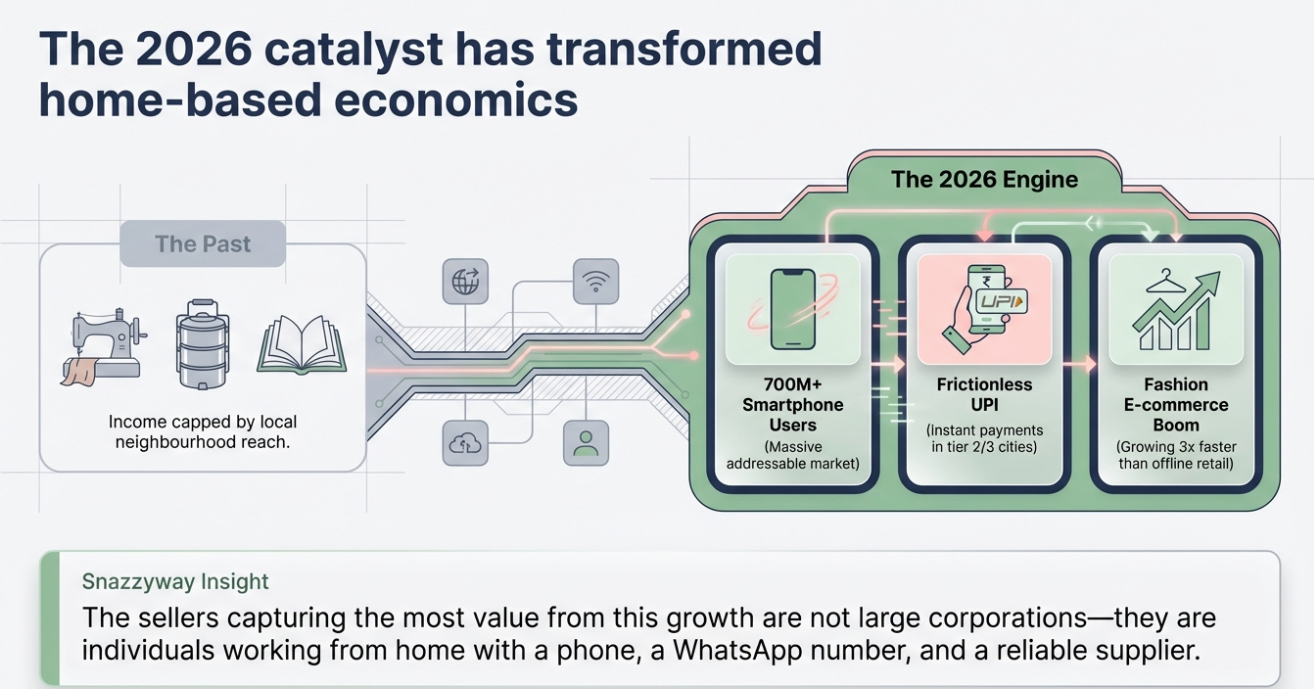
Smartphone penetration in India has crossed 700 million users. UPI has made digital payments frictionless even in the smallest towns. Instagram has given every person with a phone a free storefront. And the women's fashion category — particularly lingerie, nightwear, and intimate wear — has shifted massively online, creating a huge gap between customer demand and available sellers who can serve that demand well.
Fashion ecommerce in India has grown 3x faster than offline retail in recent years. That growth has not slowed down. And the sellers capturing the most value from that growth in 2026 are not large companies — they are individuals working from home, often with nothing more than a phone, a WhatsApp number, and a reliable supplier.
What Is the Business Model — Explained Simply
The model that most successful home-based sellers use is called dropshipping. Here is how it works in plain language:
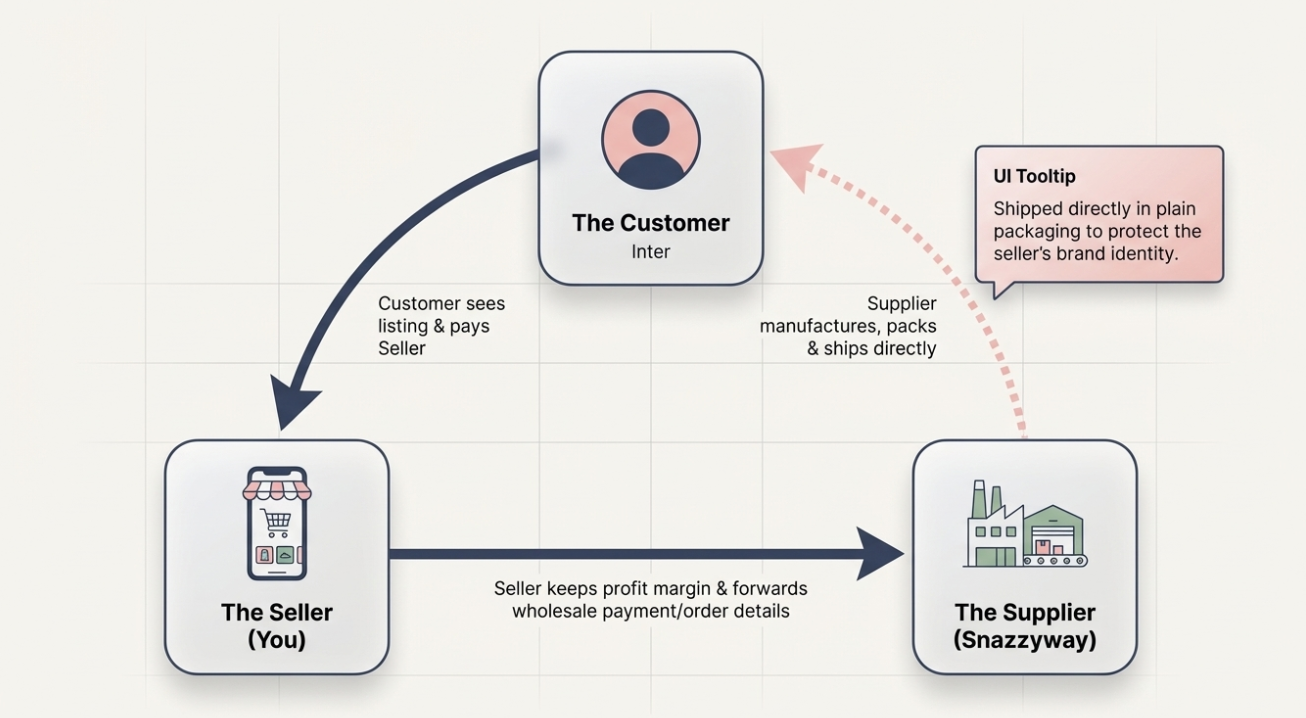
- You sign up with a supplier like Snazzyway who manufactures the products
- You list those products on your Instagram, WhatsApp catalogue, or Shopify store
- A customer sees your post or listing and places an order with you
- You forward that order to the supplier
- The supplier packs and ships the product directly to your customer — in plain packaging if you prefer
- You keep the difference between what the customer paid you and what the supplier charged you
You never touch the product. You never pack a box. You never visit a post office. Your job is only two things — finding customers and keeping them happy.
| What You Handle | What the Supplier Handles |
|---|---|
| Product listings and photos | Manufacturing and quality control |
| Customer communication | Packing and labelling |
| Marketing and social media | Shipping and tracking |
| Payments from customers | Returns and damaged goods process |
| Brand building | Inventory management |
This division of responsibility is why housewives with no warehouse, no staff, and no logistics experience can run a serious fashion business from their phone.
How Much Can You Actually Earn — Realistic Numbers
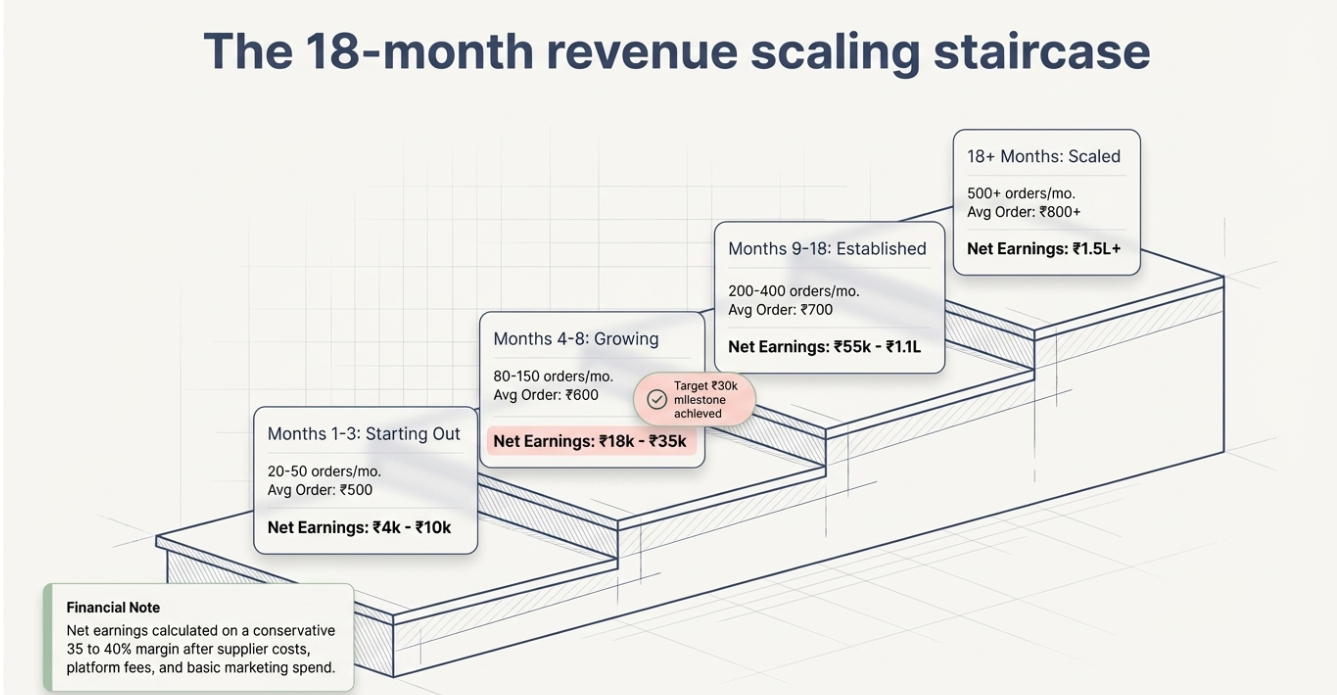
This is the question everyone wants answered honestly. Here is a realistic breakdown based on what we see across our seller network in 2026.
| Stage | Monthly Orders | Average Order Value | Gross Revenue | Approx Net Earnings |
|---|---|---|---|---|
| Starting out (month 1 to 3) | 20 to 50 orders | ₹500 | ₹10,000 to ₹25,000 | ₹4,000 to ₹10,000 |
| Growing (month 4 to 8) | 80 to 150 orders | ₹600 | ₹48,000 to ₹90,000 | ₹18,000 to ₹35,000 |
| Established (month 9 to 18) | 200 to 400 orders | ₹700 | ₹1,40,000 to ₹2,80,000 | ₹55,000 to ₹1,10,000 |
| Scaled (18 months plus) | 500+ orders | ₹800+ | ₹4,00,000+ | ₹1,50,000+ |
Net earnings assume a margin of 35 to 40% after supplier cost, platform fees, and basic marketing spend. These are conservative estimates — sellers who build strong repeat customer bases and reduce their paid ad dependency earn significantly more on the same order volume.
The ₹30,000 per month milestone that most sellers talk about as a goal sits comfortably in the Growing stage — typically achievable between months 4 and 8 for sellers who are consistent with their marketing and product quality.
Real Seller Stories From Our Network
These are real patterns from sellers in the Snazzyway network. Names have been kept general for privacy.
"I started in 2021 with a WhatsApp status post showing three nightwear sets. I got two orders that first week from my own contacts. I used the profit from those two orders to run a small Instagram boost. By month six I was doing 80 orders a month sitting at my kitchen table while my children were at school." — Seller, Lucknow
"My husband was skeptical when I told him I wanted to start selling online. I had never run a business in my life. Within eight months I was earning more than his salary. He helps me manage orders on weekends now." — Seller, Jaipur
"The thing nobody tells you is how much repeat business you get in this category. Once a woman buys nightwear from you and loves the quality, she comes back every two months. My top 50 customers alone account for almost 40% of my monthly revenue." — Seller, Nagpur
These stories are not outliers. They represent a pattern we have documented across 4,000 sellers in our network — consistent, predictable growth for sellers who focus on product quality, customer trust, and repeat purchases rather than chasing viral moments.
Pros and Cons of Selling Fashion Online From Home in India
Pros
- Zero inventory required — no upfront stock purchase, no storage space needed at home
- Flexible hours — orders can be managed in 2 to 3 hours per day once systems are set up
- Low startup cost — Instagram and WhatsApp are free, Shopify costs less than ₹2,000 per month
- High repeat purchase category — women's fashion buyers come back regularly without you spending on ads
- Growing market — demand from tier 2 and tier 3 cities is increasing every month in 2026
- Work from anywhere — phone and internet connection is all the infrastructure you need
- No experience required — supplier handles all the complex operational parts
Cons
- Income is not immediate — first 2 to 3 months require consistent effort before significant earnings
- Customer communication takes time — especially in the early months before systems are automated
- Requires daily presence on social media — consistency matters more than perfection but it does require time
- Dependent on supplier reliability — a supplier problem directly affects your customers and reputation
- Competitive in some subcategories — saturated niches require more creative marketing to stand out
Step by Step — How to Start From Zero This Week
Here is the exact sequence that works based on what successful sellers in our network have done.
Step 1 — Choose your subcategory Do not start by selling everything. Pick one focused area — nightwear is the easiest starting point because sizing is simpler, demand is consistent, and return rates are very low. Bra sets have the highest repeat purchase rate. Plus-size fashion has the least competition and the most loyal buyers. Pick one and go deep on it before expanding.
Step 2 — Sign up with a manufacturer-direct supplier This is the most important decision you will make. A manufacturer-direct supplier controls their own production, which means consistent quality, stable pricing, and reliable shipping. Middleman suppliers and aggregators introduce quality inconsistency that kills your reputation before it is even built. Explore Snazzyway's dropshipping platform — India's leading women's clothing and lingerie dropshipping supplier since 2014, trusted by 4,000+ active sellers — to understand what a manufacturer-direct partnership looks like in practice.
Step 3 — Set up your selling channel Start with Instagram and WhatsApp — both are free and both are where Indian women discover and buy fashion products. Create a dedicated Instagram account for your store. Post product images daily — morning posts between 8 and 10 AM and evening posts between 7 and 9 PM get the best engagement in the Indian market. Use your WhatsApp status to show new arrivals and sold-out products to create urgency.
Step 4 — Build a Shopify store when orders start coming Once you are consistently getting 20 to 30 orders per month from Instagram and WhatsApp, invest in a Shopify store. This gives you a professional storefront, automated order management, and the ability to run Google and Facebook ads. Understanding how to connect your Shopify store with an Indian fashion supplier will help you set up the supplier integration correctly from the start so orders flow automatically without manual forwarding.
Step 5 — Focus on repeat purchases above everything else Save every customer's WhatsApp number. Send a follow-up message 3 days after delivery asking if they are happy with the product. Share new arrivals with your existing customers before posting publicly. Offer a small loyalty discount on their third purchase. The sellers who reach ₹30,000 per month fastest are the ones who convert first-time buyers into loyal repeat customers — not the ones who constantly chase new customers.
🔍 Snazzyway Insight
One of the most consistent findings across our seller data is that the path from ₹0 to ₹30,000 per month is almost never about finding a viral product or running the perfect ad. It is about building a customer list of 200 to 300 loyal buyers who trust your store and come back every 6 to 8 weeks.
In the women's fashion category — particularly nightwear and lingerie — this repeat purchase cycle is built into the nature of the product. Customers need new options regularly. They buy for themselves, for gifts, for different seasons. A seller who serves 250 loyal customers well will consistently earn ₹30,000 to ₹50,000 per month with almost no ad spend.
This is exactly the pattern we documented in what 4,000 sellers taught us about success in the women's clothing business in India — the sellers who last and scale are relationship builders, not product pushers.
The Tools You Need — And What They Cost
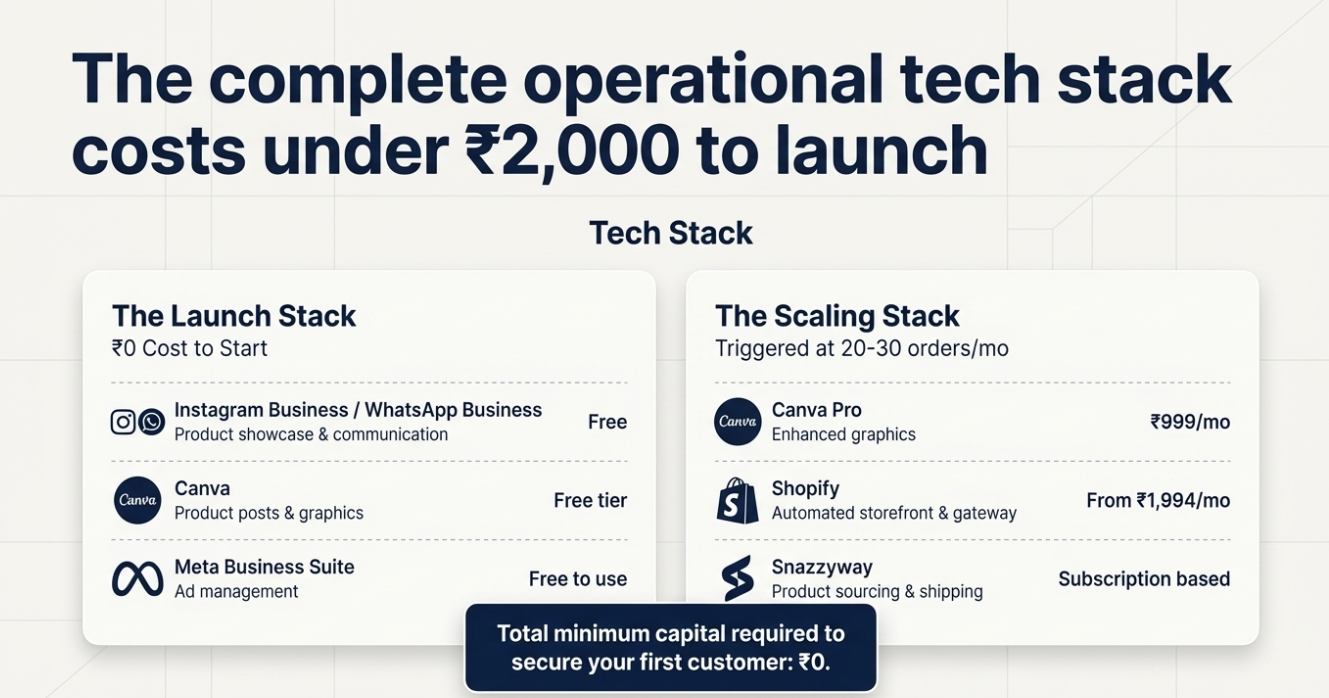
| Tool | Purpose | Cost Per Month |
|---|---|---|
| Instagram Business Account | Product showcase and customer discovery | Free |
| WhatsApp Business | Order taking and customer communication | Free |
| Canva | Creating product posts and story graphics | Free or ₹999 for Pro |
| Shopify | Full online store with payment gateway | From ₹1,994 |
| Snazzyway Dropshipping Platform | Product sourcing, order management, shipping | Subscription based |
| Google Analytics | Understanding where your traffic comes from | Free |
| Meta Business Suite | Managing Instagram and Facebook ads | Free — pay only for ads |
Total minimum startup cost to reach your first order: under ₹2,000. Total cost to run a properly set up store processing 100 orders per month: under ₹5,000 per month in platform and tool fees.
What Subcategory Should You Start With in 2026
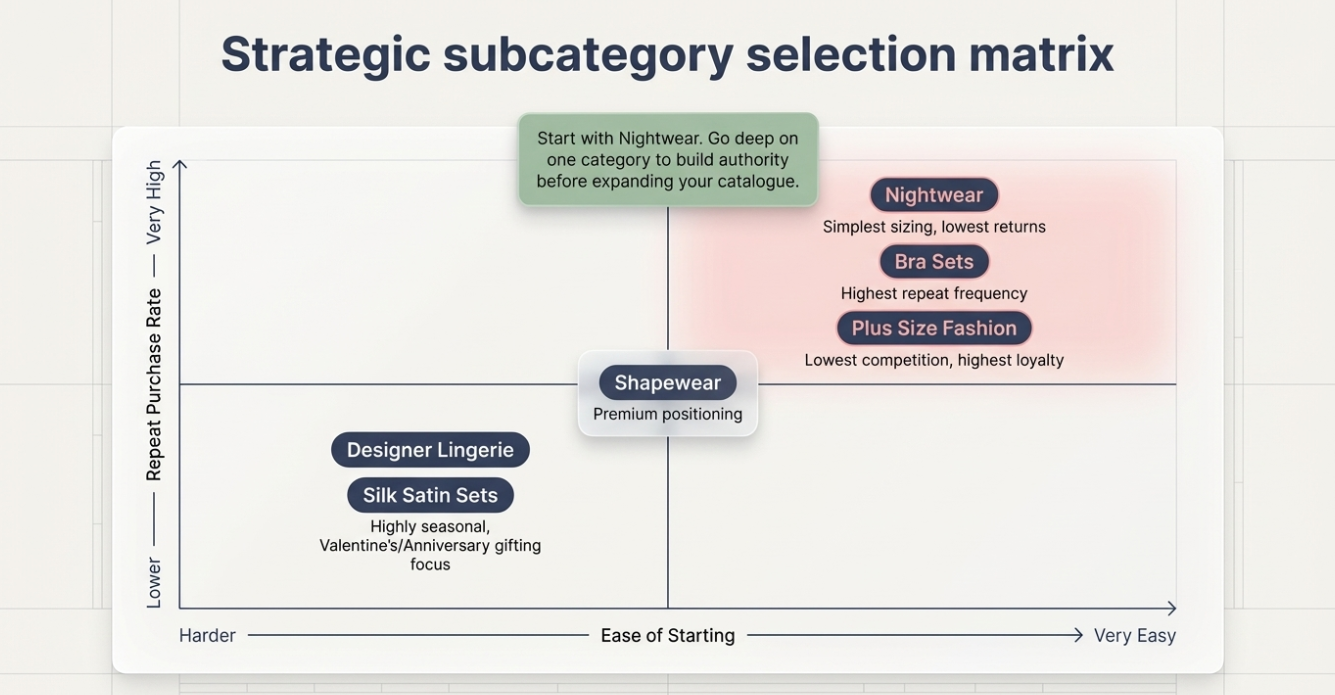
Based on real performance data from our seller network, here is how the main subcategories rank for home-based sellers starting in 2026:
| Subcategory | Ease of Starting | Repeat Purchase Rate | Competition | Recommended For |
|---|---|---|---|---|
| Nightwear | Very Easy | High | Low to Medium | Best first category for new sellers |
| Bra Sets | Medium | Very High | Medium | Best for maximising repeat revenue |
| Plus Size Fashion | Easy | High | Low | Best for building loyal niche audience |
| Shapewear | Medium | Medium to High | Medium | Good for premium positioning |
| Designer Lingerie | Medium | Medium | Low | Best for gifting and festive seasons |
| Silk Satin Sets | Easy | Medium | Low | Best for Valentine's and anniversary gifting |
For sellers who want to explore the full product range before deciding, browsing the designer lingerie collection and the nightwear range gives a clear picture of what is available and what sells well across different customer profiles.
Common Mistakes to Avoid in Your First 3 Months
Most home-based sellers who struggle make the same avoidable mistakes. Here are the ones we see most often across our seller network:
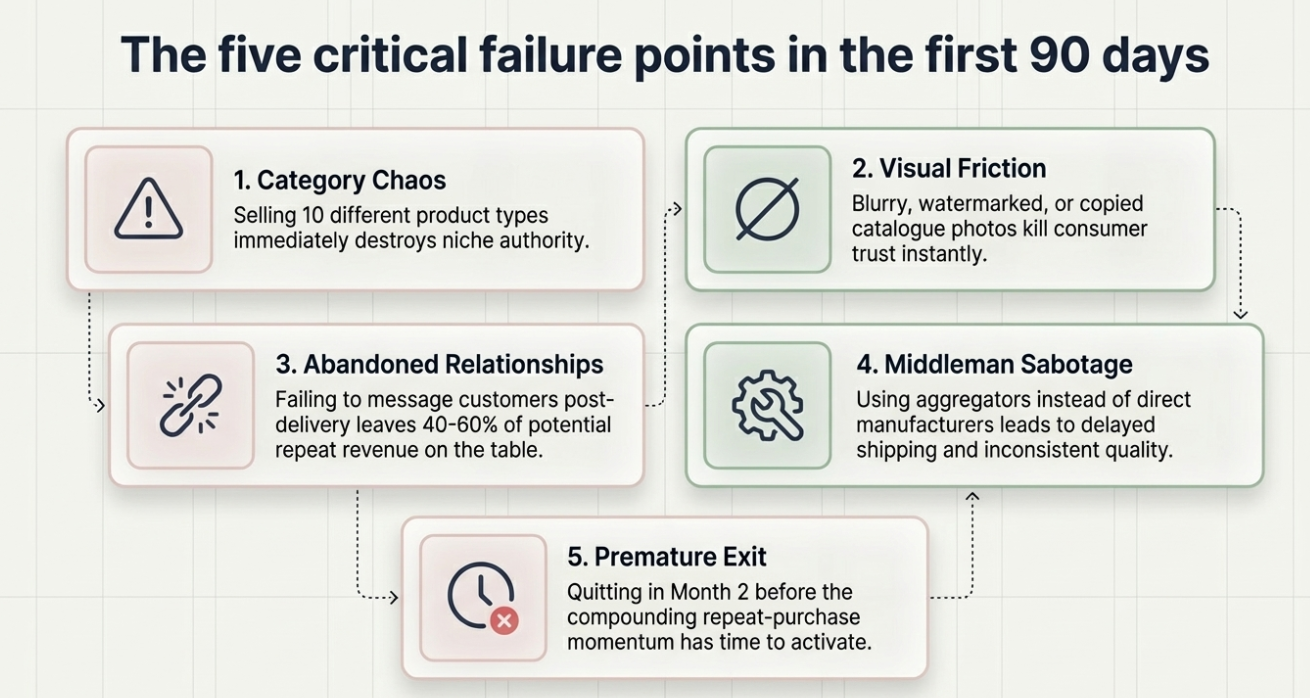
Selling too many categories too soon. Starting with 10 different product types confuses customers and makes your Instagram look like a generic catalogue rather than a trusted store. Start with one subcategory and build authority in it first.
Using bad product photos. Your photos are your storefront. Blurry, dark, or catalogue-copied images with watermarks kill trust instantly. Use clean white-background images and natural light lifestyle shots.
Not following up with customers. The biggest money in this business is in the follow-up. Sellers who message customers after delivery and share new arrivals directly on WhatsApp consistently earn 40 to 60% more than sellers who only post publicly and wait for new customers.
Choosing the wrong supplier. A supplier who sends inconsistent quality or delays shipments will destroy your reputation before you have had time to build it. Read about the platform supporting thousands of fashion resellers to understand what a reliable supplier relationship looks like from day one.
Giving up too early. The first month is always the hardest. Most sellers who reach ₹30,000 per month will tell you that months one and two felt like they were wasting their time. Consistency in those early months is what separates the sellers who build real businesses from the ones who quit before the momentum starts.
Frequently Asked Questions
Q1. Can a housewife with no business experience really earn ₹30,000 per month selling online in India? Yes — and it happens regularly in our seller network. The business model does not require prior experience because the complex parts — manufacturing, packing, shipping, inventory — are handled entirely by the supplier. What it does require is consistency in marketing, genuine care for customer relationships, and choosing the right product category and supplier from the start. Most sellers who follow this approach reach ₹20,000 to ₹30,000 per month within 6 to 9 months.
Q2. How many hours per day does this business require? In the early months, expect to spend 2 to 4 hours per day — primarily on posting content, responding to customer messages, and forwarding orders to your supplier. Once your store is set up on Shopify with automated order processing, the daily time requirement reduces significantly. Established sellers processing 200 plus orders per month often spend 3 to 4 hours per day on the business total.
Q3. Do I need a GST number to start selling fashion online from home in India? For sales below ₹40 lakh per year you are not required to register for GST for most product categories. However, if you are selling on Amazon or Flipkart, GST registration is mandatory regardless of turnover. For Instagram, WhatsApp, and your own Shopify store, you can start without GST registration and register once your business grows. Always consult a CA for advice specific to your situation.
Q4. What is the best platform to start selling fashion online from home in India in 2026? Instagram and WhatsApp together are the best starting combination for home-based sellers in India in 2026. They are free, they are where Indian women discover and buy fashion products, and they allow for personal relationship-based selling which is a natural strength for home-based sellers. Move to Shopify once you are consistently processing 20 to 30 orders per month and want to scale beyond your personal network.
Q5. How do I handle customer complaints about size or quality when dropshipping? A reliable manufacturer-direct supplier like Snazzyway provides consistent quality and handles returns and damaged goods through a structured process. For size complaints, the solution is prevention — a clear, product-specific size guide on every listing before the purchase happens. For quality complaints, your supplier's return policy and how quickly they resolve issues is the key factor. Always test your supplier's complaint handling process with a small order before scaling.
Q6. Can I sell under my own brand name when dropshipping from a supplier? Yes. Many suppliers including Snazzyway offer white-label options where products are shipped in plain or custom-branded packaging under your store name. This allows you to build brand recognition and customer loyalty from your very first order without managing any manufacturing or inventory yourself.
Q7. How do I get my first customers when I have zero followers and zero reviews? Start with your existing network — friends, family, neighbours, colleagues. Offer your first 5 to 10 customers a small discount in exchange for an honest review and a photo of the product. Use those reviews and photos in your next Instagram posts. This creates genuine social proof that attracts new customers outside your personal network. Most successful sellers in our network made their first 20 to 30 sales purely through personal WhatsApp contacts before any social media growth happened.
You must login to post a comment.

Related Articles
You may also like these posts
How Snazzyway Works — A Complete Guide for New Dropshipping Sellers in India
Mar 30, 2026
How Snazzyway Has Supported Indian Fashion Sellers for 12 Plus Years
Mar 30, 2026

Why Women Fashion Is the Best Category to Sell Online in India Right Now
Mar 24, 2026
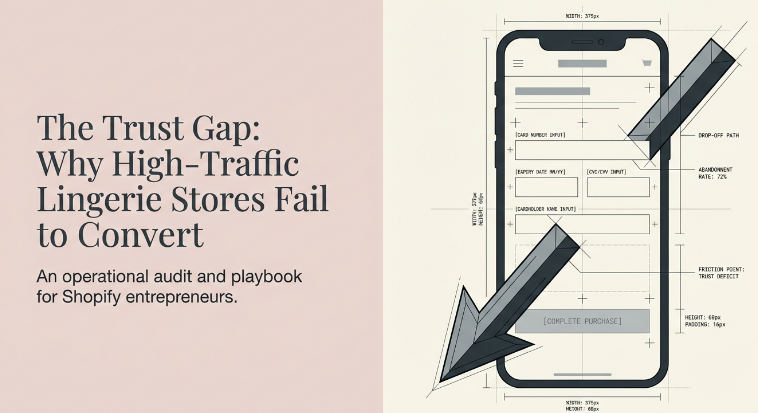
7 Reasons Your Shopify Lingerie Store Is not Converting (And How to Fix It)
Mar 24, 2026
How We Choose Fabrics for Snazzyway Nightwear Collection
Mar 24, 2026